My First Indigo Dyeing Experiments – From Green to Blue
There is something almost magical about watching cloth emerge from an indigo vat during the indigo dyeing process.
My first experiments with indigo dyeing began with three very different fabrics: a delicate ponge silk scarf, satin cotton and a linen blouse.
I approached them as experiments rather than with a perfectly planned outcome. I wanted to observe, learn and allow the process to guide me.
And then came that wonderful indigo moment.
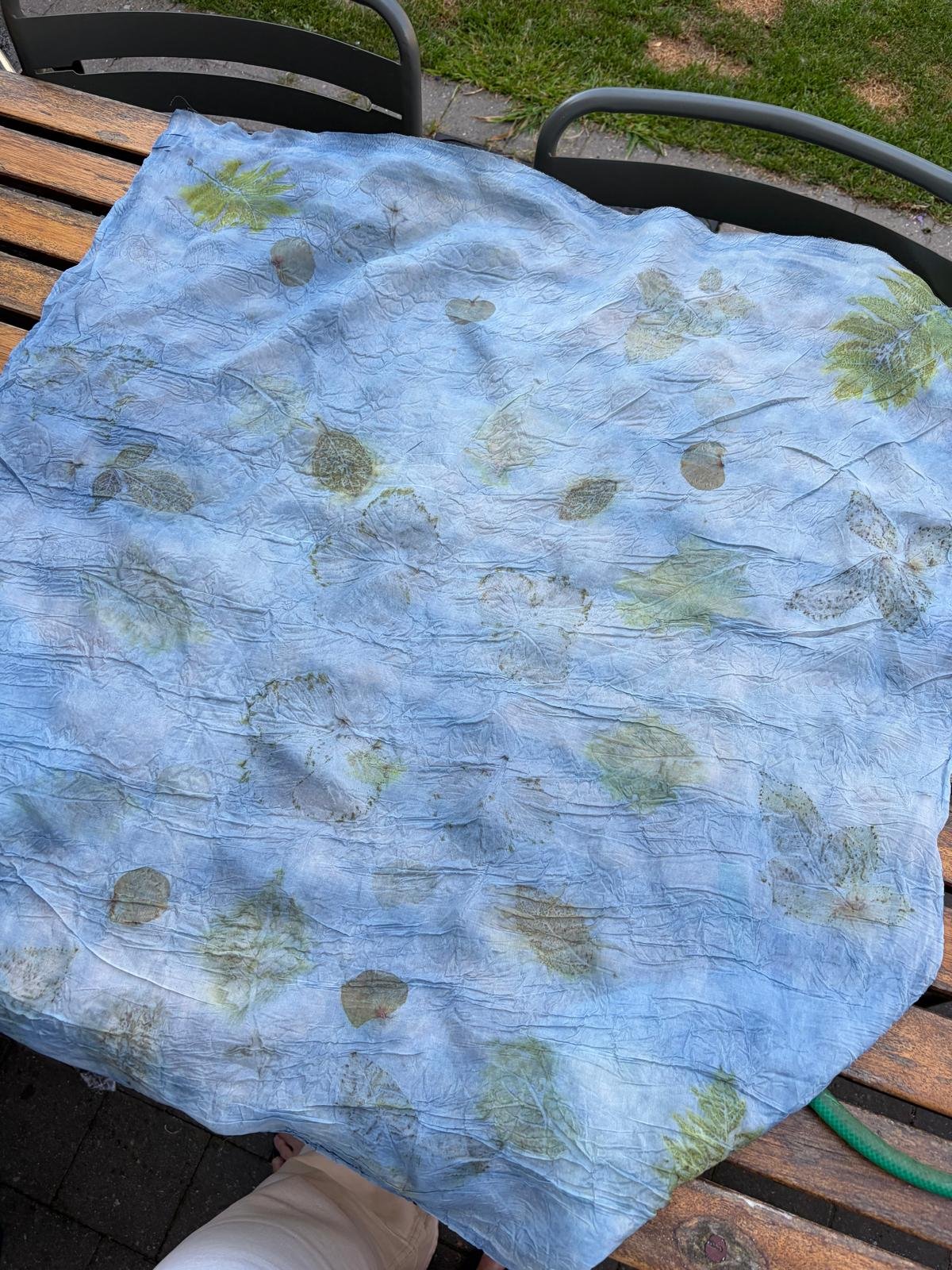
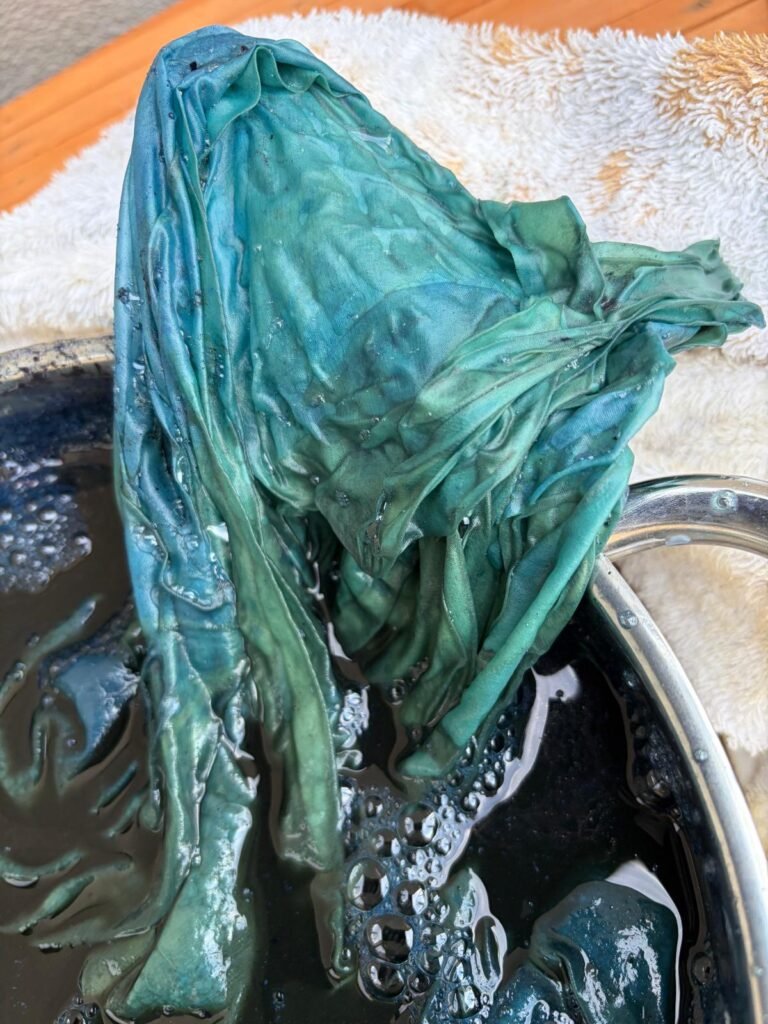
The fabric emerged from the vat looking green rather than blue. Slowly, as it met the air, the colour began to change. Green shifted towards turquoise and gradually developed into the beautiful blue I had been waiting for.
It is one of those moments in natural dyeing that feels almost magical — even when you understand the chemistry behind it.
A little chemistry behind the indigo-dying-vat-blue
Unlike many natural dyes, indigo does not simply dissolve in water and attach itself to the fibre. It needs to be transformed into a soluble form first. For this experiment I used a simple 1-2-3 fructose vat: one part indigo, two parts calcium hydroxide and three parts fructose.
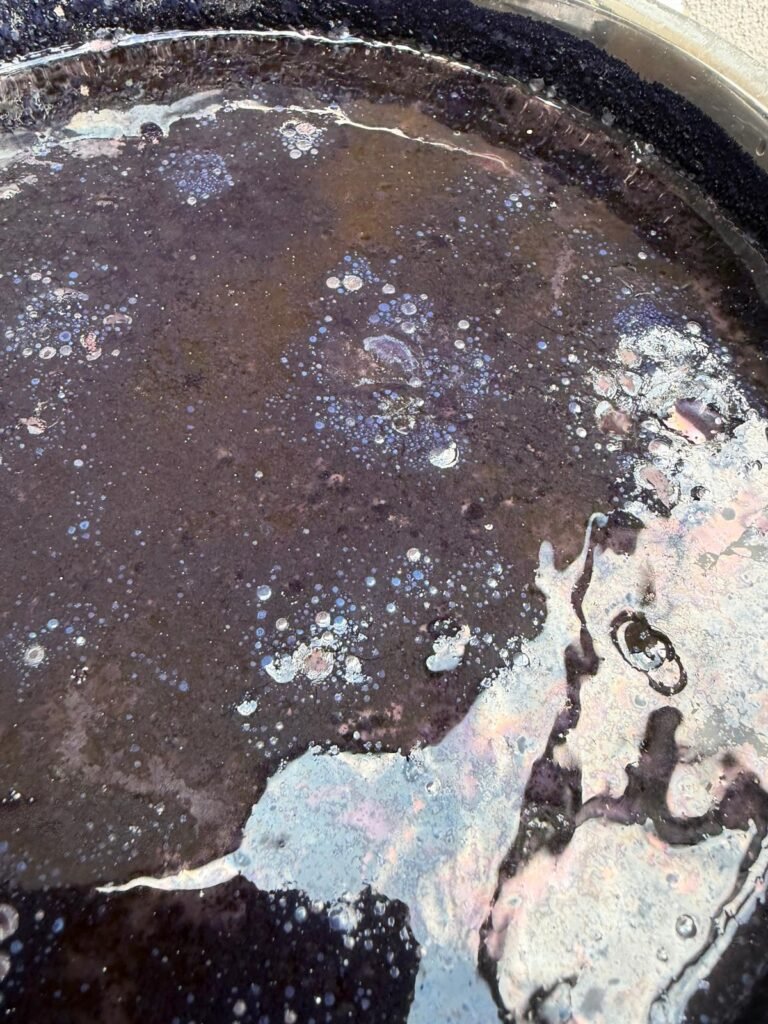
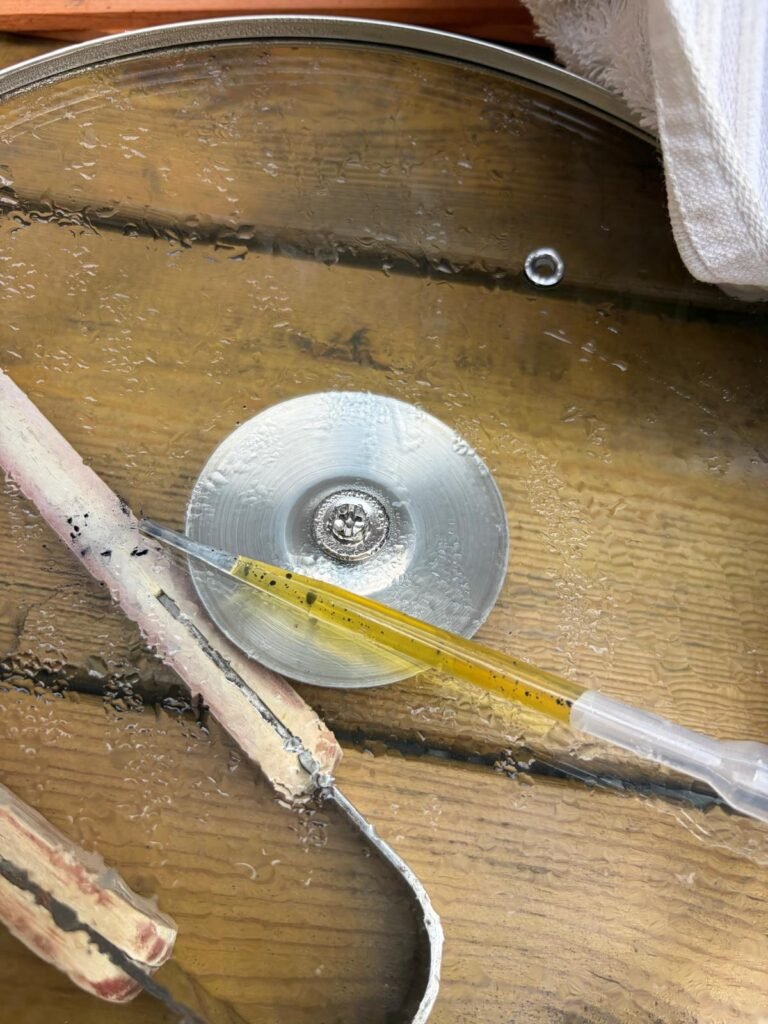
The calcium hydroxide creates the alkaline conditions (pH 10 – 11.5) the vat needs , while the fructose acts as the reducing agent. Together they transform the indigo into a form that can enter the fibres. Once the fabric is removed from the vat and exposed to oxygen, the indigo oxidises back into its insoluble blue form — creating the characteristic blue colour on the fabric.
Building a deeper colour through indigo dyeing takes patience. Rather than leaving the fabric in the vat for one long soak, I used repeated dips, allowing the fabric to oxidise in the air between each one. With every dip, another layer of indigo could build on the fibre and deepen the colour.
Adding the botanical prints after indigo dyeing
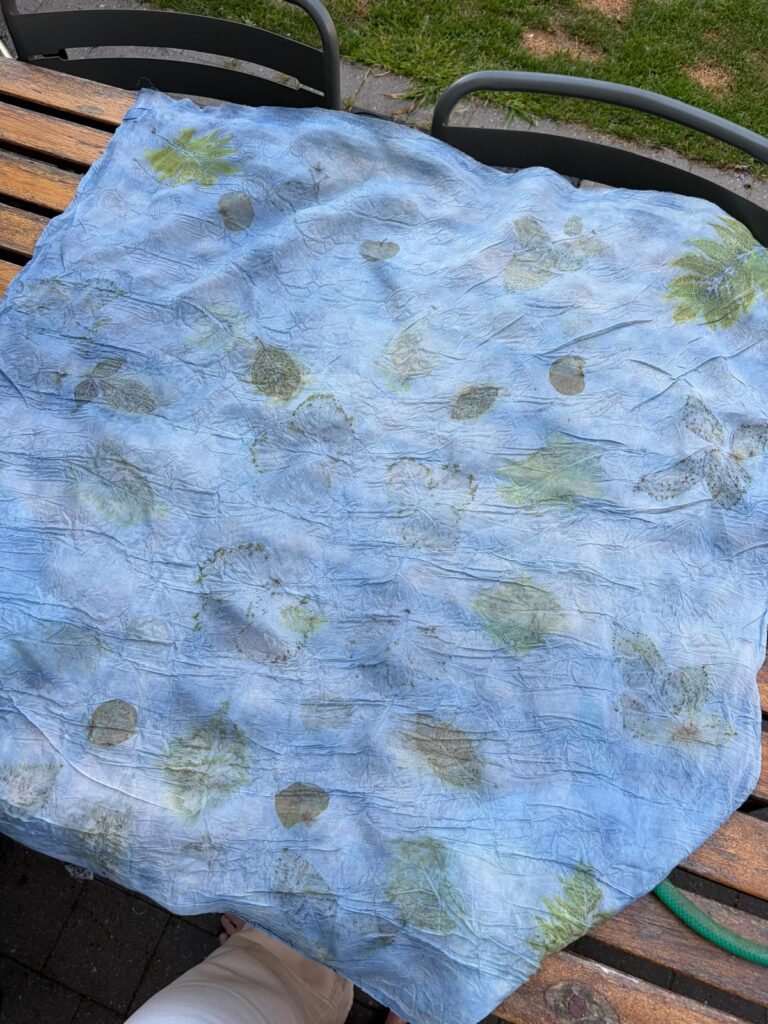
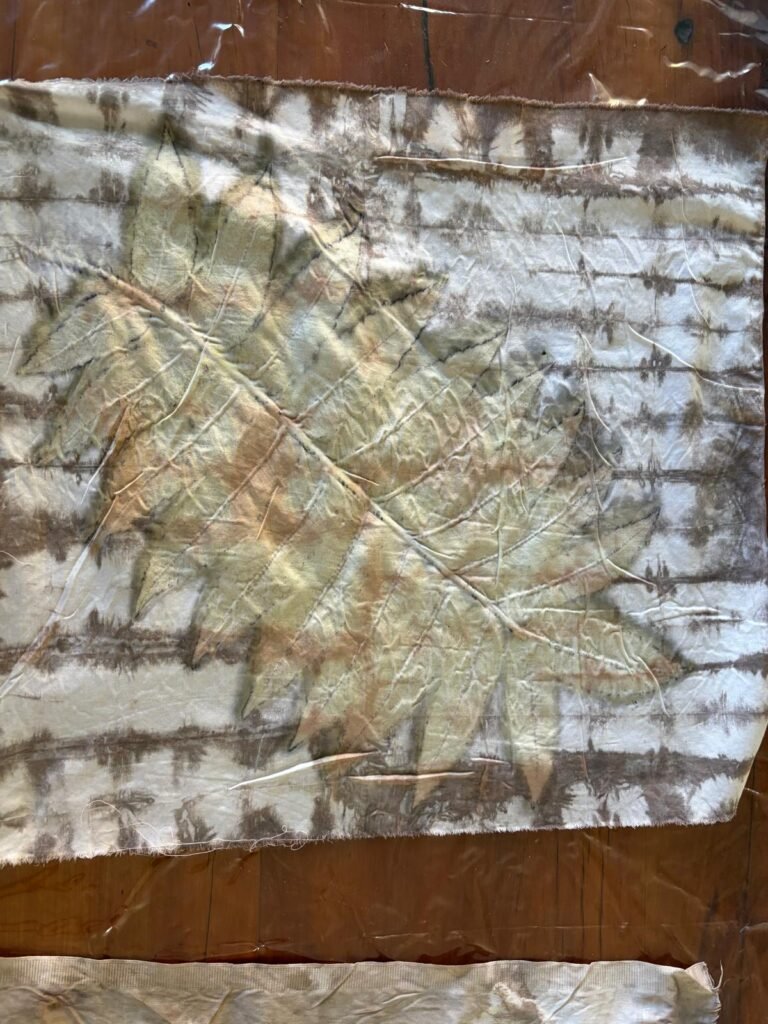
Once the ponge silk scarf had been dyed with indigo, I mordanted it with alum before moving on to the botanical printing. I used leaves of sumac, blackcurrant, red dogwood and eucalyptus, arranging them directly on the silk and allowing heat, moisture and time to draw their individual marks into the cloth.
I was not aiming for a perfectly controlled pattern. I wanted to see which leaves would print most clearly and how their colours and shapes would interact with the indigo beneath them. Some impressions came through strongly, while others remained soft and subtle — exactly the kind of unpredictability that makes botanical printing so interesting.
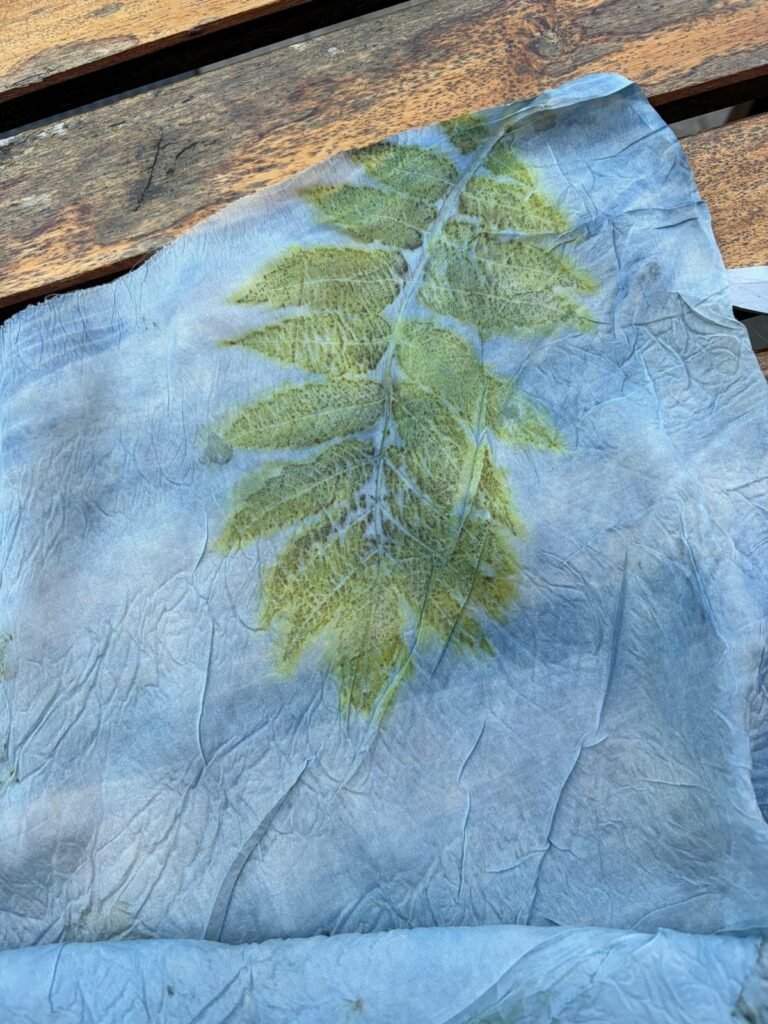
The idigo dyeing experiment continues……
The satin cotton and linen blouse have also been through the indigo vat, but their story is not finished yet. The linen blouse was later treated with soy milk in preparation for the next stage, and both the cotton and linen are still waiting for their botanical prints.
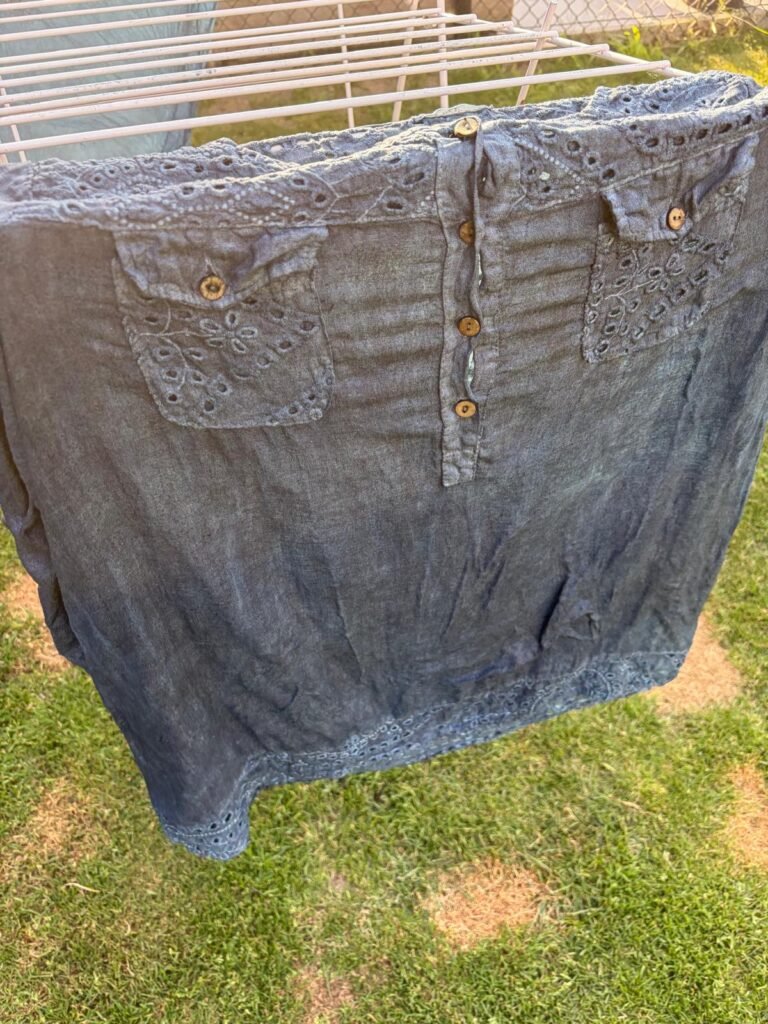
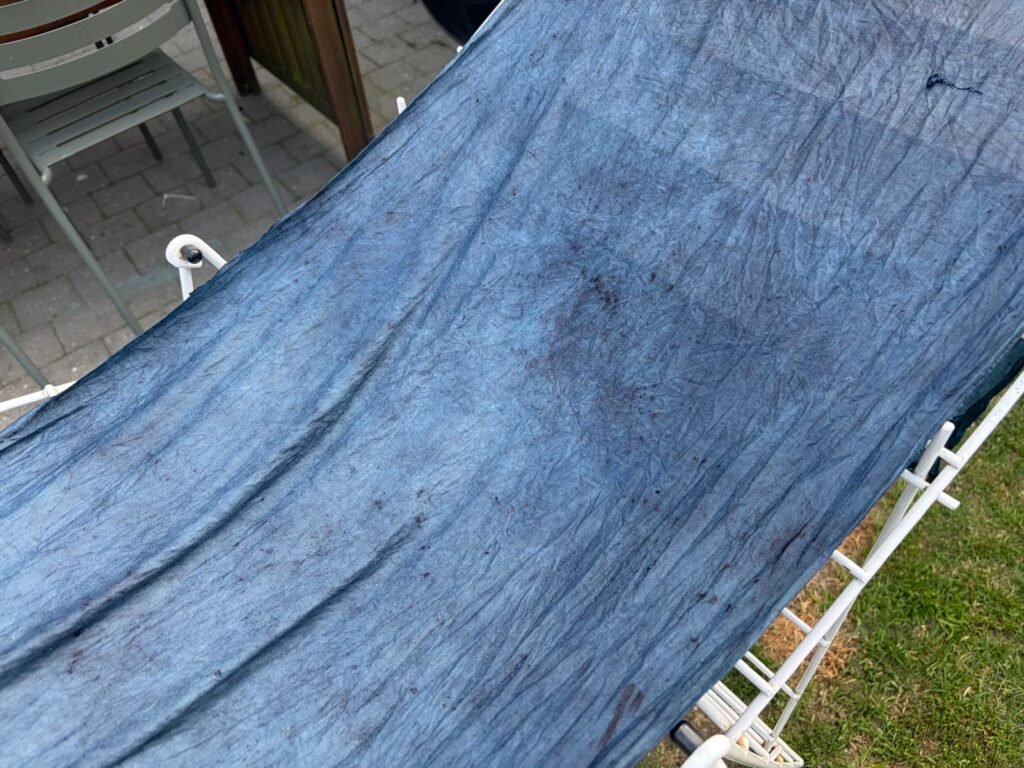
I like that these pieces are still evolving. Natural dyeing rarely feels like a straight line from beginning to end. Each stage suggests the next, and sometimes the most interesting results come from simply paying attention to what the cloth is telling me.
From green to blue, from leaf to cloth — this is only the beginning of my experiments with the indigo dyeing vat and botanical textiles.
✨ Nature is the artist. I am simply listening.